The Animal Encyclopedia

Learn the animals like a caretaker does.

Real natural history for every animal family in our care, written by the people who feed, clean, enrich, and adore them. Tap any animal to open its entry, and look for the myth-busters along the way.

Sanctuary mammals

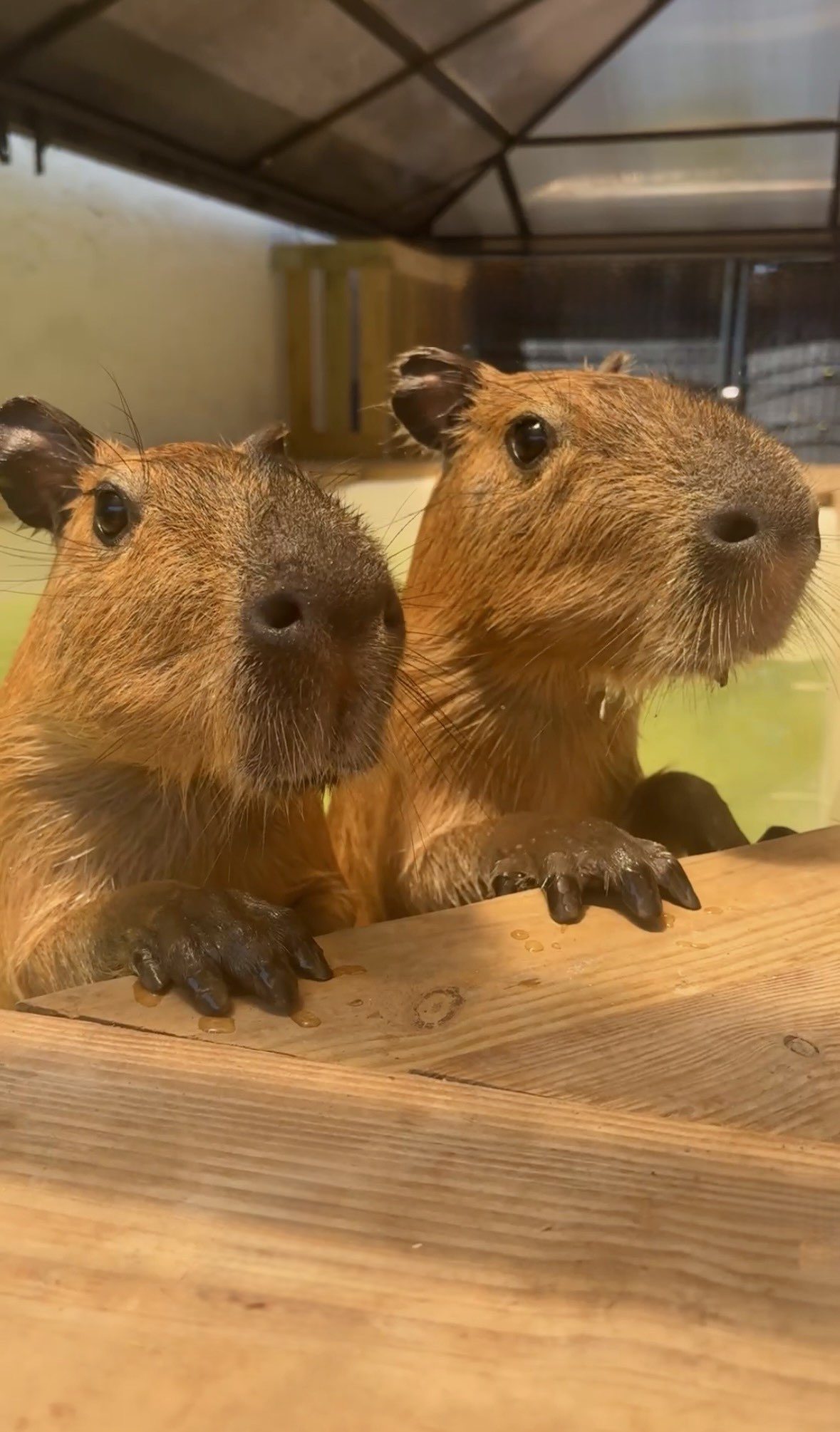
Capybara

Hydrochoerus hydrochaeris
Open entry
Two capybaras at the water
More in the gallery →
NATIVE TO
South America
DIET
Grasses, aquatic plants
CLAIM TO FAME
World's largest rodent
STATUS
Least Concern

Capybaras are the largest rodents on Earth and among the most social. In the wild they live in groups along rivers and wetlands, grazing like small hippos and slipping into the water to cool off or escape predators. Their eyes, ears, and nostrils sit high on the head so they can stay nearly submerged and still keep watch. Webbed feet make them surprisingly strong swimmers.

Their famous calm is real, and it's social intelligence at work: capybaras communicate constantly through purrs, clicks, and whistles, and their relaxed body language is why so many other species seem comfortable around them.

Conservation connection: capybaras are thriving in the wild, but their wetland homes are not. Protecting wetlands protects hundreds of species that share them.

Fennec Fox

Vulpes zerda
Open entry
A fennec fox resting with ears raised
More in the gallery →
NATIVE TO
Sahara Desert, North Africa
DIET
Insects, rodents, plants, eggs
CLAIM TO FAME
World's smallest fox
STATUS
Least Concern

Those enormous ears aren't just adorable. They radiate heat to keep the fox cool in the desert, and they're sensitive enough to hear insects and rodents moving under the sand. Fennecs are built for one of the harshest places on Earth: furry footpads protect against scorching sand, and their kidneys are so efficient they can go long stretches without free-standing water.

Myth-buster: fennec foxes look like easy pets, and the exotic pet trade sells them that way. In reality they are nocturnal, loud, and wired to dig and roam. Many end up surrendered, which is how foxes like ours find sanctuary homes.
Conservation connection: the best way to love a wild animal is not to own one. Meet them at accredited facilities instead, and let ambassadors do the teaching.

Asian Small-Clawed Otter

Aonyx cinereus
Open entry
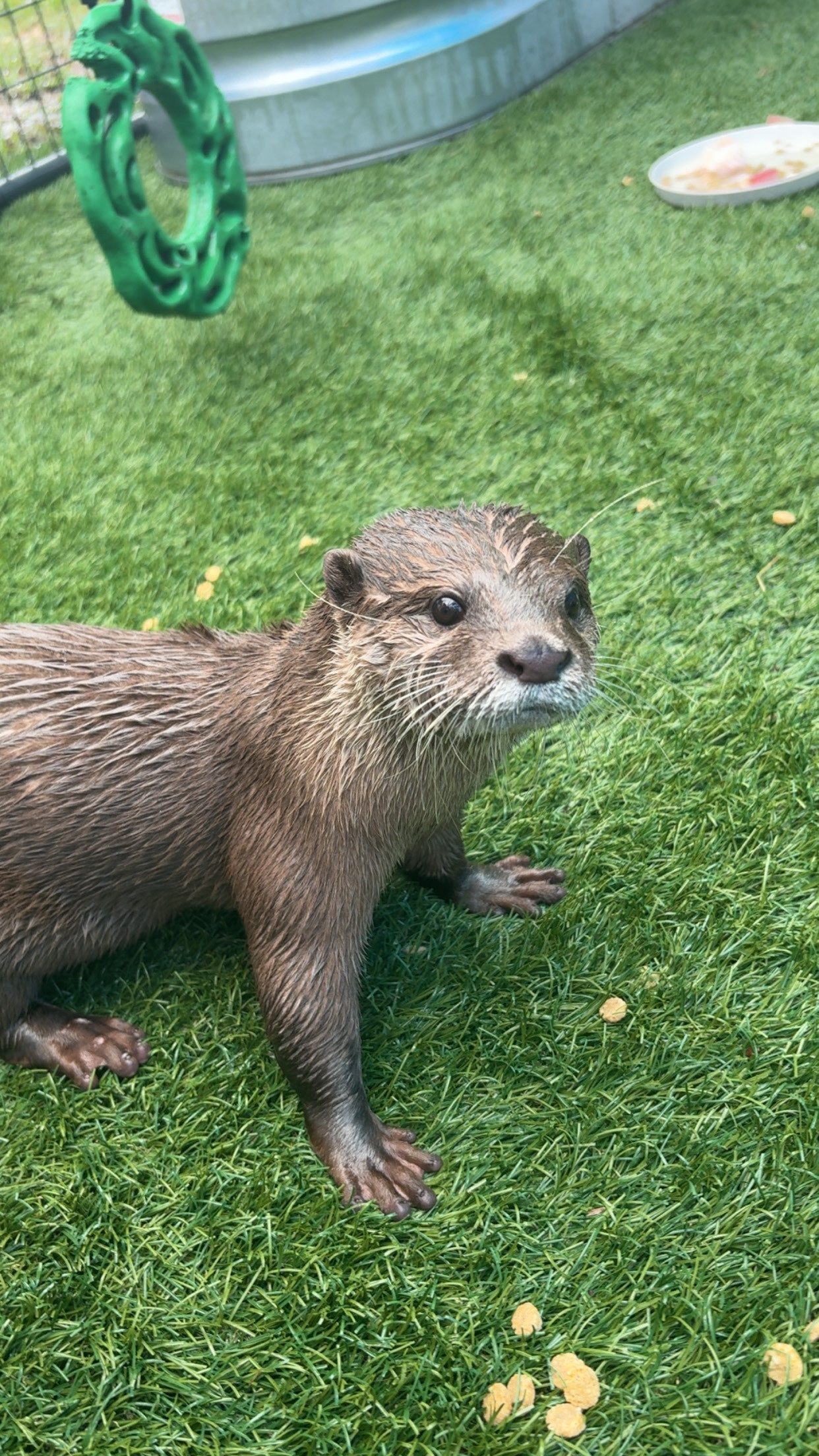
An Asian small-clawed otter looking up from the grass
More in the gallery →
NATIVE TO
South and Southeast Asia
DIET
Crabs, snails, crayfish, small fish
CLAIM TO FAME
The smallest otter in the world
STATUS
Vulnerable

Asian small-clawed otters are the smallest otters in the world and members of the weasel family. Their partly webbed paws and short, nimble fingers let them feel for crabs, snails, and crayfish in muddy water, and they spend a surprising amount of their day juggling stones and shells. Play is how young otters practice hunting skills and how families bond, and they live in close family groups.

Otters are also an indicator species: because they sit near the top of aquatic food webs, healthy otter populations usually mean healthy, clean wetlands and waterways.

Conservation connection: wetland loss and the illegal pet trade are major threats to wild Asian small-clawed otters. Choosing not to buy exotic pets, and protecting clean water close to home, both help.

Lemurs

Family Lemuridae
Open entry
NATIVE TO
Madagascar only
DIET
Fruit, leaves, flowers, insects
CLAIM TO FAME
Primates found nowhere else
STATUS
Most species threatened

Lemurs are primates that evolved in isolation on Madagascar for tens of millions of years, which is why they exist nowhere else on the planet. They live in social groups where, unusually for mammals, females typically lead. They sunbathe sitting upright with arms spread, communicate in scents and songs, and fill the ecological roles monkeys fill elsewhere.

They are also among the most endangered mammals on Earth. Deforestation has erased most of Madagascar's original forest, and the vast majority of lemur species are now threatened with extinction.

Conservation connection: every lemur ambassador is a spokesperson for an island in crisis. Supporting reforestation in Madagascar is one of the highest-impact things a wildlife lover can do.

Patagonian Mara

Dolichotis patagonum
Open entry
NATIVE TO
Argentina
DIET
Grasses and shrubs
CLAIM TO FAME
A rodent that looks like a tiny deer
STATUS
Near Threatened

Maras confuse everyone on first sight: rabbit-like face, deer-like legs, and a bounding run. They are actually giant rodents and close cousins of the capybara. In the wild they form lifelong pairs, and multiple pairs sometimes share communal dens where all the pups are raised together.

Conservation connection: maras are declining as Patagonian grasslands are converted and fragmented. Grassland habitats worldwide are among the least protected on Earth.

African Crested Porcupine

Hystrix cristata
Open entry
NATIVE TO
North and sub-Saharan Africa
DIET
Roots, bulbs, bark, fruit
CLAIM TO FAME
A crest of quills over a foot long
STATUS
Least Concern

African crested porcupines are big, ground-dwelling, mostly nocturnal rodents whose entire defense strategy is "please reconsider." They raise the crest, rattle the hollow quills on their tail, stamp their feet, and, if that fails, back toward a threat. The quills are modified hairs, and pairs often stay together for years.

Myth-buster: porcupines cannot shoot their quills. Quills detach on contact, which is impressive enough without the superpowers.
Conservation connection: porcupines roam at night, and slow-moving wildlife pays the highest price on roads. Slowing down at dusk and after dark saves porcupines, opossums, and owls alike.

Brown-Nosed Coati

Nasua nasua
Open entry
NATIVE TO
South America
DIET
Insects, fruit, small animals
CLAIM TO FAME
The raccoon's adventurous cousin
RELATIVES
Raccoon family

Brown-nosed coatis, also called South American coatis, are long-nosed members of the raccoon family that are active by day, which makes them wonderfully watchable. That flexible snout probes leaf litter for insects and fruit while the striped tail sticks straight up like a flag so group members can find each other in tall grass. Females and young travel in lively bands; adult males mostly go solo.

Conservation connection: coatis often reach sanctuaries through the exotic pet trade. Clever, strong, and busy, they need far more than a house can offer.

Ferrets, Chinchillas, and Small Companions

Domesticated small mammals
Open entry
ORIGIN
Domesticated for centuries
DIET
Varies by species
CLAIM TO FAME
Beloved, and often surrendered
ROLE HERE
Ambassadors for pet responsibility

Ferrets are domesticated relatives of the European polecat, famous for their "war dance" of sideways hops when excited. Chinchillas are Andean rodents with the densest fur of nearly any land mammal, so plush they bathe in volcanic dust instead of water. Alongside our bunnies and guinea pigs, they teach one of the most important lessons here: small animals are big commitments.

Conservation connection: most small companions at sanctuaries were once someone's impulse purchase. Research before you adopt, and adopt before you shop.
The pasture crew

Highland Cattle

Bos taurus
Open entry
Two Highland cattle resting together
More in the gallery →
ORIGIN
Scottish Highlands
DIET
Grasses and forage
CLAIM TO FAME
The famous fluffy fringe
TEMPERAMENT
Famously gentle

Highland cattle are one of the oldest registered cattle breeds in the world, shaped by centuries of Scottish wind and rain. The iconic shaggy coat is actually two layers: an oily outer layer that sheds weather and a downy undercoat for warmth. The long fringe over the eyes, called a dossan, helps protect against flies and stinging rain.

Their calm temperament is legendary among farmers, which is why they cope well with calm, small-group visits.

Conservation connection: heritage livestock breeds carry genetic diversity modern agriculture has bred away. Keeping old breeds thriving is conservation too.

Camels

Genus Camelus
Open entry
A camel leaning over the fence to say hello
More in the gallery →
ORIGIN
Domesticated millennia ago
DIET
Grasses, grains, desert plants
CLAIM TO FAME
Desert survival champions
EYELASHES
Two rows, sand-proof

Camels are engineering marvels: nostrils that close against blowing sand, a double row of eyelashes, and the ability to drink an enormous amount of water in minutes when they finally find it. They have carried trade, culture, and entire civilizations across deserts for thousands of years.

Myth-buster: the hump does not store water. It stores fat, an energy reserve that lets a camel go long stretches without food, and burning it releases moisture as a bonus.
Conservation connection: working animals shaped human history. Respecting them means understanding their needs, from proper diets to room to roam.

Alpacas and Llamas

Vicugna pacos and Lama glama
Open entry
An alpaca with an impressively fluffy haircut
More in the gallery →
ORIGIN
Andes Mountains
DIET
Grasses and hay
TELL THEM APART
Llamas: bigger, banana ears
FAMILY
Camelids, like camels

Both are South American camelids domesticated by Andean peoples thousands of years ago, but for different jobs: alpacas for their extraordinarily soft fleece, llamas as pack animals and livestock guardians. Llamas are larger with long curved ears; alpacas are smaller with straight ears and a teddy-bear face. Both hum to communicate, and yes, both can spit, though it's mostly reserved for each other.

Conservation connection: sustainable fiber like alpaca fleece shows how humans and animals can thrive together when the relationship is built on care.

Zebu and Barnyard Friends

Bos indicus and company
Open entry
ZEBU ORIGIN
South Asia
CLAIM TO FAME
Heat-loving humped cattle
THE CREW
Goats, sheep, pigs, donkeys, ponies
SMARTEST OF ALL
Pigs, by a mile

Zebu are among the world's oldest cattle lineages, instantly recognizable by the hump of muscle and tissue over their shoulders and superbly adapted to heat, which makes Florida feel like home. Around them lives the whole barnyard cast: goats that climb anything, sheep that remember faces for years, donkeys that guard their pastures, and pigs that consistently rank among the most intelligent animals ever studied.

Conservation connection: farm animals feel, learn, and remember. Meeting them face to face is the fastest way to start caring about how all animals are treated.
Scales and shells

Bearded Dragon

Pogona vitticeps
Open entry
NATIVE TO
Australia
DIET
Insects and vegetables
CLAIM TO FAME
Waves hello with one arm
THE BEARD
Darkens with mood

Bearded dragons are desert lizards with a surprisingly rich social vocabulary: slow arm waves signal peaceful intentions, head bobs assert status, and the spiny "beard" puffs up and darkens when they want to look tough. They spend mornings basking to warm up, because like all reptiles they run on borrowed heat.

Conservation connection: reptiles are often the least protected animals in the pet trade. Learning what proper reptile care requires (heat, light, space, diet) is step one in respecting them.

Ball Python

Python regius
Open entry
NATIVE TO
West and Central Africa
DIET
Small mammals
CLAIM TO FAME
Curls into a ball when shy
VENOM
None. Zero.

Ball pythons get their name from their gentlest habit: when frightened, they coil into a tight ball with their head tucked safely in the middle. They are non-venomous constrictors that sense the world through heat-sensing pits along the lip and a tongue that "smells" the air. Calm and slow-moving, they are often a student's first positive encounter with a snake.

Myth-buster: snakes are not slimy. Their scales are dry, smooth, and cool, which surprises almost everyone who touches one for the first time.
Conservation connection: fear is the biggest threat snakes face. Most "problem snakes" in Florida yards are harmless natives doing free pest control.

Tortoises and Turtles

Order Testudines
Open entry
AGE OF LINEAGE
Older than dinosaurs' end
DIET
Mostly plants (tortoises)
TELL THEM APART
Tortoises: land. Turtles: water.
LIFESPAN
Decades, often outliving owners

The shell is not a house a tortoise lives in. It's the animal's own skeleton, with the ribs and spine fused right into it, complete with nerve endings. That's why a tortoise can never leave its shell and why scratches matter. Many tortoise species live so long that adopting one is genuinely a multi-generation family decision.

Myth-buster: never "help" a tortoise by putting it in water. Tortoises are land animals and many cannot swim. Turtles swim; tortoises walk.
Conservation connection: in Florida, the gopher tortoise digs burrows that shelter hundreds of other species. Protecting one animal can protect a whole neighborhood of wildlife.
Florida natives in rescue

Virginia Opossum

Didelphis virginiana
Open entry
An opossum sleeping on a soft blanket
More in the gallery →
NATIVE TO
North America
DIET
Nearly everything
CLAIM TO FAME
North America's only marsupial
STATUS
Least Concern

Opossums carry their babies in a pouch like a kangaroo, resist the venom of native pit vipers, and quietly clean up carrion, insects, and garden pests every night. "Playing possum" is real and involuntary: under extreme stress they collapse into a death-like state that can last for hours.

Myth-buster: opossums are not aggressive and are very rarely rabid. The open-mouthed hiss is pure theater from one of the most harmless animals in your yard.
Conservation connection: the best thing you can do for an opossum is nothing at all. Let the night shift work.

Skunks, Armadillos, Raccoons, Foxes, and Squirrels

Your wild neighbors
Open entry
A three-banded armadillo foraging in the grass
More in the gallery →
WHERE
All around Florida
SKUNK SPRAY
A last resort, with warnings
ARMADILLO TRICK
Jumps straight up when startled
OUR ROLE
Rescue and humane response

These are the animals at the heart of our rescue mission. Skunks stamp their feet and raise their tails long before they ever spray. Nine-banded armadillos, armored in bony plates, leap vertically when surprised, which is why roads are their greatest danger. Raccoons solve puzzles with famously clever paws, and gray foxes can climb trees.

When these neighbors end up somewhere they shouldn't be, Noah's Ark Wildlife Removal answers with humane response: relocation over destruction, every time it's possible. The ones who can't return to the wild are why the sanctuary exists.

Conservation connection: coexistence starts at home. Secure trash lids, cap chimneys, and never feed wildlife, and most conflicts never happen.

Conservation 101: what every visitor should know

Habitat is everything

Nearly every threatened animal in this encyclopedia is threatened for the same reason: the place it lives is disappearing. Wetlands for capybaras, forests for lemurs, grasslands for maras. Protecting habitat protects entire communities of species at once.

The exotic pet problem

Many sanctuary residents nationwide began as exotic pets purchased on impulse. Wild animals don't stop being wild because they were born in human care. If you love an animal, learn about it, visit it, sponsor it, and let it live the life it was built for.

Coexistence beats conflict

Most encounters between people and Florida wildlife end badly only when fear makes the decisions. Humane solutions exist for nearly every situation, and they're usually simpler and cheaper than the alternative.

You have more power than you think

Slow down on wooded roads at dusk. Keep chemicals out of storm drains. Plant native. Skip attractions that let you take selfies holding wild animal babies. And bring a kid to meet a real animal, because nobody protects what they've never met.

Now meet them for real

Reading about a capybara is good. Sitting with one is unforgettable. Book an encounter, plan a field trip, or bring the sanctuary to your school.

Plan a visit Education programs